
Research
Uncertainty in water, at three scales
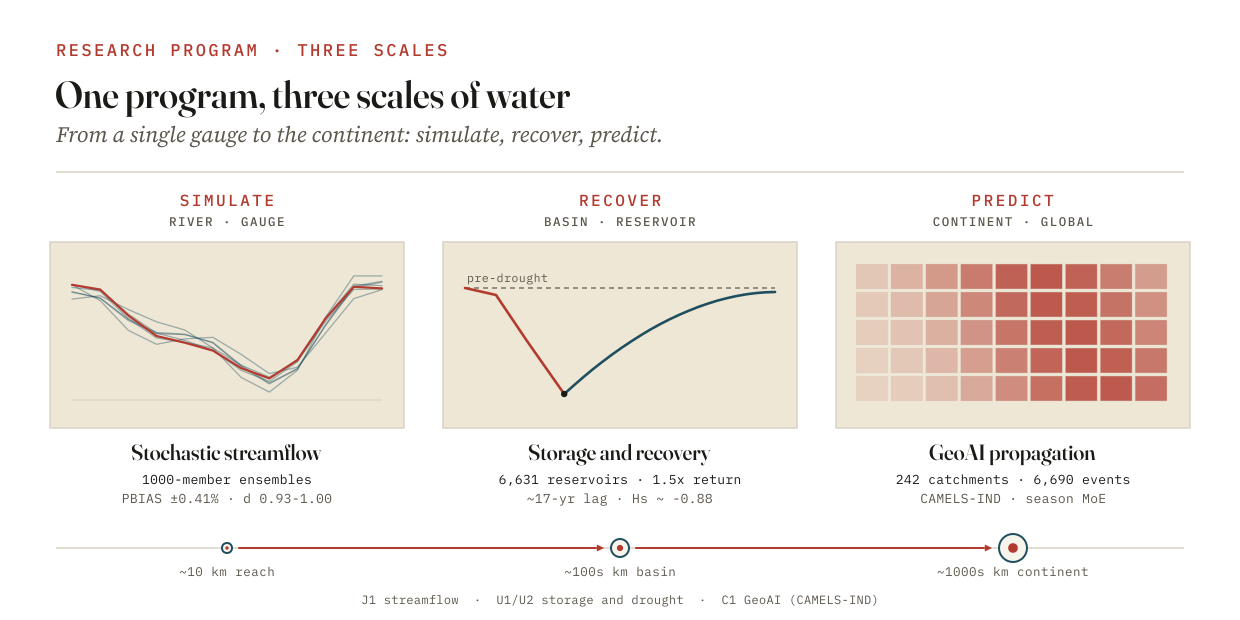
One thread runs through my work: water records are short, noisy, and changing, and the decisions that depend on them are not. I build stochastic and machine-learning models that quantify what we don't know — and act anyway.
Simulate
Stochastic streamflow and rainfall
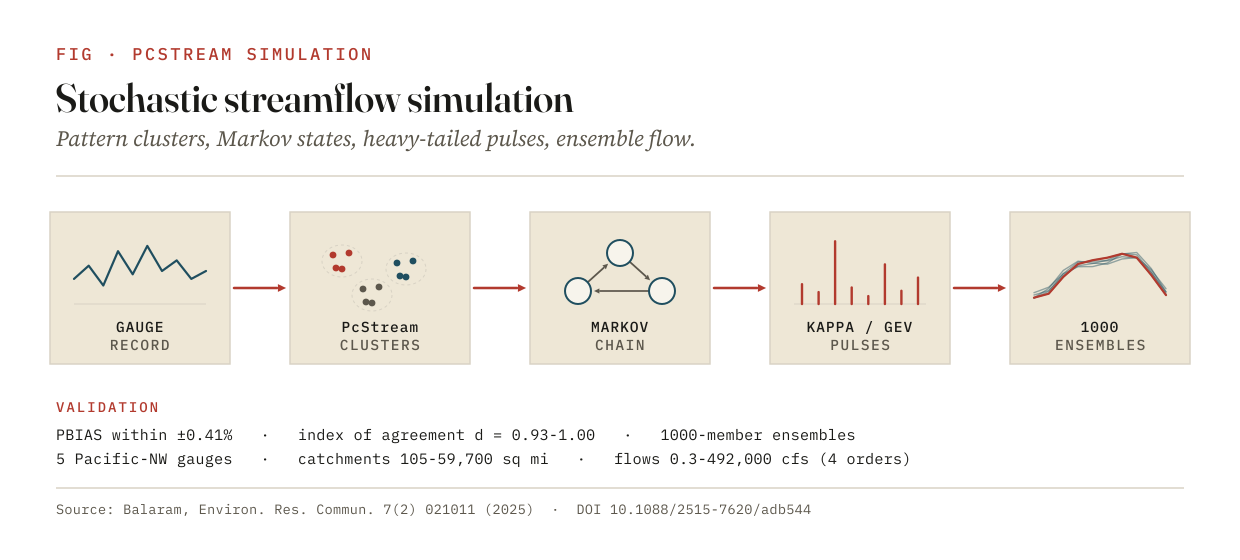
When a gauge has thirty years of record, planning for a hundred-year event is an act of extrapolation. Stochastic simulation makes that honest: generate thousands of plausible streamflow series that preserve the statistics of the observed record, then plan against the ensemble rather than the single history that happened to occur. My doctoral work introduced a multi-step method coupling PcStream clustering with Markov-chain processes for daily streamflow, validated on river basins and preserving spatial cross-correlation across gauging stations.
Recover
How droughts and reservoirs recover
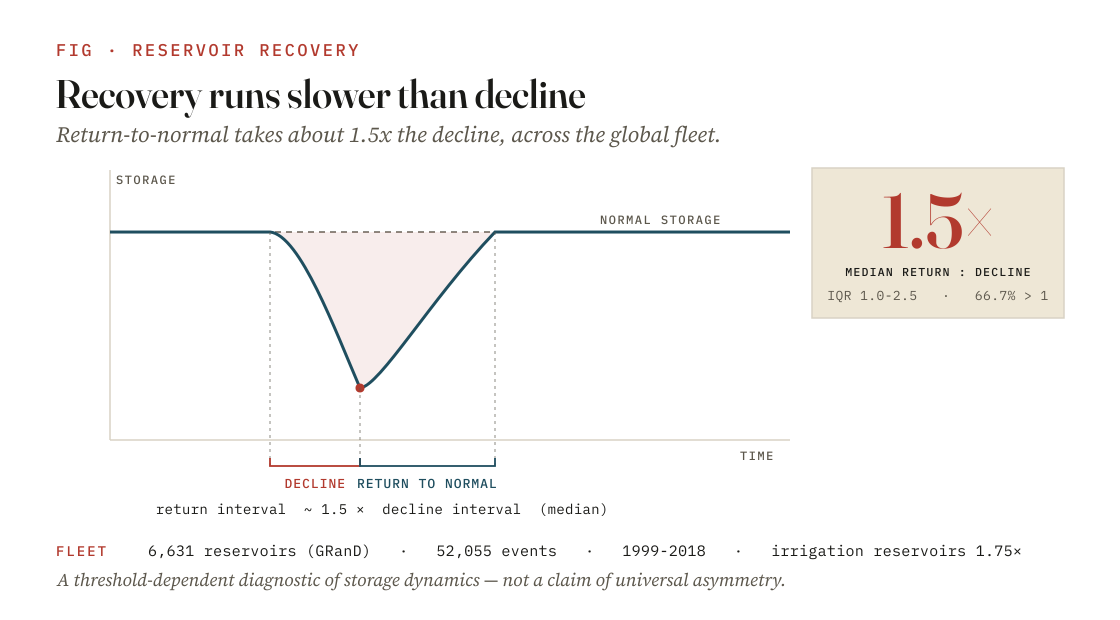
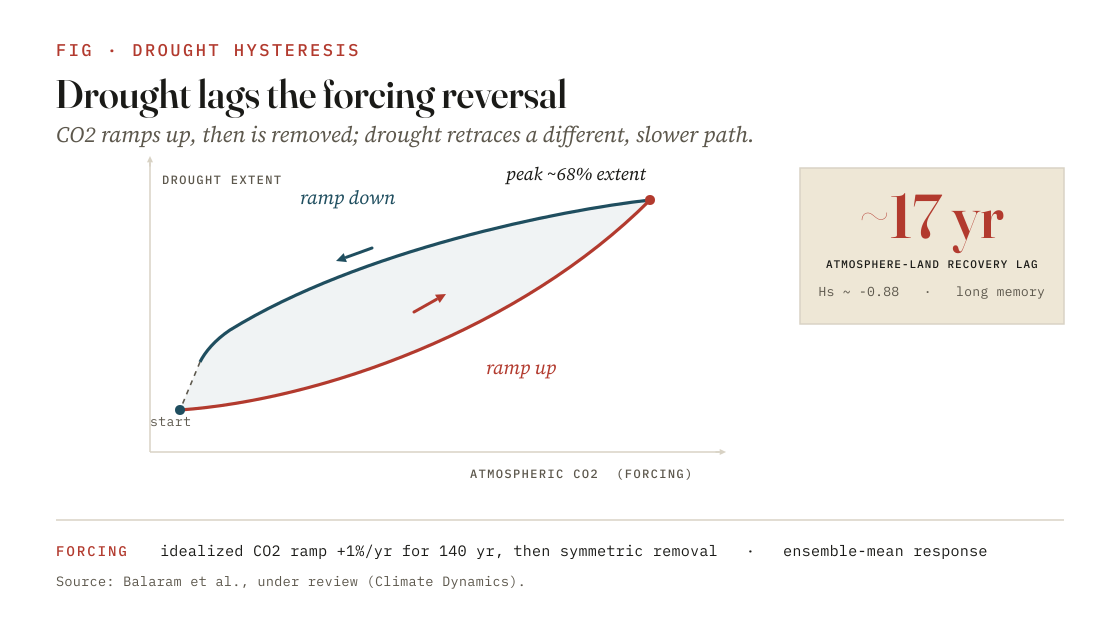
Water systems fall fast and recover slowly. Across global reservoir records, the return-to-normal phase of a storage anomaly typically runs longer than its development — a persistence diagnostic for supply planning, not a universal law. Under CO₂-removal scenarios, hydroclimatic drought in the Indian monsoon region shows hysteresis: the atmosphere and the land surface recover on different clocks, decoupling by roughly a decade and a half.
Predict
GeoAI for drought propagation
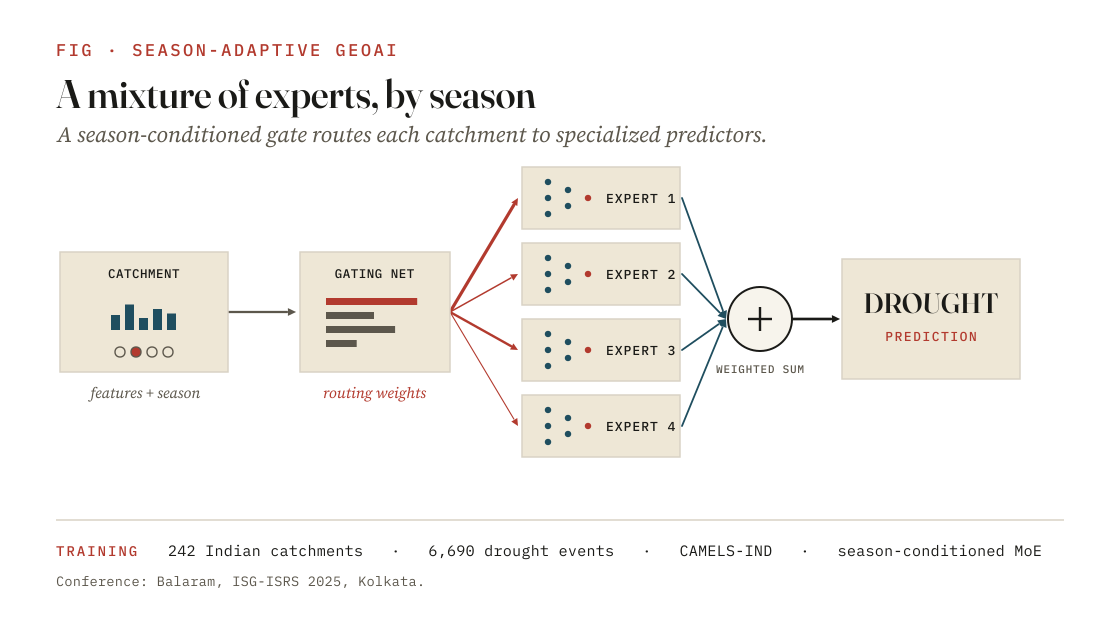
Drought does not stay where it starts. A season-adaptive mixture-of-experts framework learns how drought propagates across Indian catchments, conditioning on season so a single model does not have to average over a monsoon it should be distinguishing — trained across 242 catchments and 6,690 drought events on CAMELS-IND.
Active research areas
- Stochastic and statistical simulation of rainfall and streamflow; multi-site frameworks preserving spatial cross-correlation.
- Drought characterisation, hysteresis, recovery dynamics, and propagation under climate variability and mitigation.
- Machine learning and GeoAI for hydrology: mixture-of-experts, season-adaptive and physics-informed models, time-series forecasting.
- Climate–hydrology interactions: responses to CO₂ removal, monsoon dynamics, land–atmosphere coupling.
- Hydroinformatics: open-source modelling frameworks and production-grade pipelines.